
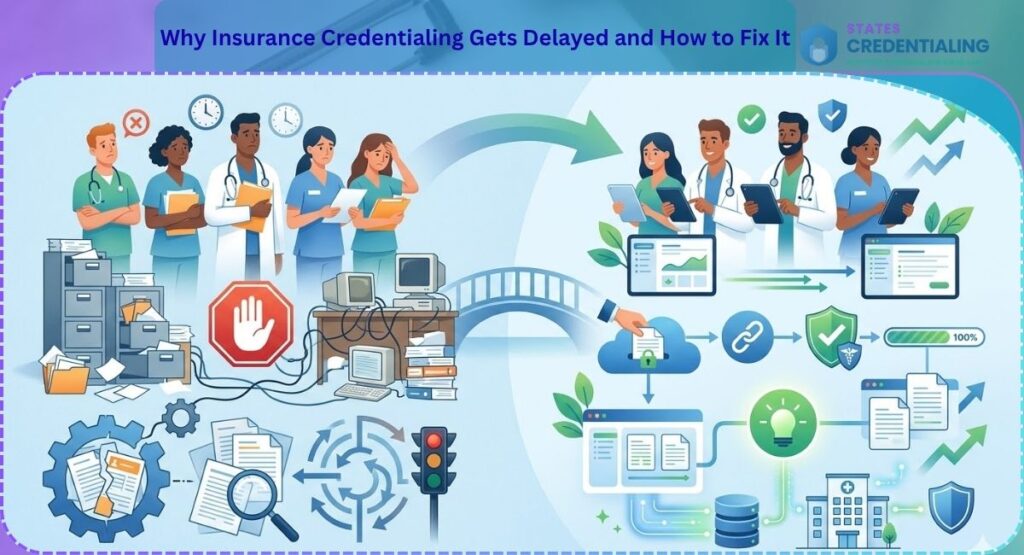
Insurance credentialing is a fundamental process for healthcare providers. Without proper credentialing, practices cannot submit claims, receive reimbursements, or provide services covered under insurance plans. Yet, many providers experience prolonged delays during this process, which can disrupt revenue streams and limit patient access. Understanding why these credentialing delays with insurance occur, and how to address them, is essential for healthcare administrators, practice managers, and providers themselves. For those starting in this process, exploring resources like our Credentialing Services for Internal Medicine Providers help offers structured guidance for smoother enrollment.
Common Causes of Insurance Credentialing Delays
Insurance credentialing delays are often the result of a combination of administrative, procedural, and external factors. Knowing the root causes allows practices to proactively manage and reduce wait times.
1. Incomplete or Incorrect Documentation
A significant reason credentialing is delayed is missing or inaccurate documentation. Providers are required to submit a variety of information, including:
- Medical licenses and certifications
- DEA registration
- Board certifications
- Practice location and tax information
- Malpractice insurance details
Even small errors in any of these documents can lead to weeks of back-and-forth communication with payers. Practices can benefit from consulting a provider credentialing checklist to ensure all submissions meet requirements.
2. Payer-Specific Processes
Each insurance company has its own application procedure, review timeline, and verification steps. Some payers respond within 30–45 days, while others may take up to 120 days. Providers often underestimate these variations, leading to mismanaged expectations.
3. High Volume of Applications
During peak enrollment periods, such as the start of a calendar year or open enrollment windows, insurance carriers handle a surge of new credentialing applications. This backlog can cause delays for even fully prepared providers.
4. Provider Verification Delays
Insurance companies must verify credentials with multiple sources, including medical schools, hospitals, and licensing boards. Slow responses from these verification entities directly impact processing times.
5. CAQH Profile Issues
Many insurance carriers rely on the Council for Affordable Quality Healthcare (CAQH) to streamline credentialing. Delays often occur when profiles are incomplete, inactive, or require frequent updates. Ensuring your CAQH profile is current is a critical step, which is why CAQH credentialing services are often recommended for busy practices.
Manual Guide to Reducing Credentialing Delays
Reducing delays requires structured workflows, accurate documentation, and proactive follow-up. Below is a practical approach:
Step 1: Organize Documentation
Create a central repository for all required credentialing documents. Include:
- Licenses and certifications
- DEA and NPI numbers
- Malpractice insurance certificates
- Hospital affiliations and privileges
- Updated CV and practice information
Table 1 provides a sample document checklist:
| Document Type | Required For | Status |
| Medical License | All states | Pending/Submitted |
| DEA Registration | Controlled substance prescriptions | Pending/Submitted |
| Board Certification | Specialty verification | Pending/Submitted |
| Malpractice Insurance | Insurance credentialing | Pending/Submitted |
| NPI Number | Federal and payer reporting | Pending/Submitted |
Step 2: Maintain an Updated CAQH Profile
Regularly review your CAQH profile and ensure:
- Current demographic and practice information
- Accurate education and training history
- Up-to-date license and certification expiration dates
- Consent forms are signed and active
This can significantly reduce credentialing delays with insurance. Consider leveraging our recredentialing services to stay compliant with recurring updates.
Step 3: Track Application Progress
Use a credentialing tracker to monitor:
- Submission dates
- Verification responses
- Follow-up tasks
- Payer communications
Consistent tracking prevents missed deadlines and ensures timely follow-up with carriers.
Step 4: Assign Responsibility
Designate a credentialing coordinator or use a dedicated service. Assigning one point of contact reduces confusion, improves accuracy, and streamlines communication with insurance carriers.
Step 5: Engage Credentialing Services
Outsourcing to experienced providers ensures compliance, faster verification, and fewer errors. For instance, our insurance verification services help practices confirm coverage eligibility and prevent processing setbacks before submission.
Common Pitfalls to Avoid
Even with proper preparation, credentialing delays can occur if certain pitfalls are overlooked:
- Submitting expired or incorrect licenses
- Forgetting to include hospital privileges
- Failing to respond promptly to requests for additional information
- Not updating CAQH profiles regularly
- Misunderstanding payer-specific requirements
Avoiding these errors can save weeks of unnecessary delays.
Understanding the Timeline
Credentialing timelines vary based on payer, specialty, and completeness of the application. The typical timeline for new providers is:
| Step | Duration (Typical) |
| Initial Application Submission | 1–2 weeks |
| Verification of Credentials | 4–8 weeks |
| CAQH Review | 1–2 weeks |
| Payer Review & Approval | 6–12 weeks |
| Total Average Duration | 2–4 months |
Delays at any stage can extend the overall process, which is why proactive management is essential. Providers can also consult resources on insurance credentialing for US healthcare providers for more detailed insights.
Benefits of Proactive Credentialing Management
Effectively managing credentialing prevents financial losses, ensures timely patient care, and strengthens payer relationships. Specific benefits include:
- Faster reimbursement cycles
- Reduced claim denials
- Improved patient satisfaction and trust
- Easier practice expansion and growth
Many healthcare administrators find that combining internal tracking with professional credentialing services offers the most reliable results.
Conclusion and Next Steps
Insurance credentialing delays are a common challenge for healthcare providers. However, understanding the causes, maintaining accurate documentation, keeping CAQH profiles updated, and engaging dedicated credentialing services can significantly reduce wait times. For providers seeking a hands-on solution, States Credentialing’s provider credentialing services offer structured support for completing applications efficiently and correctly.
By implementing the strategies outlined in this guide, practices can minimize delays, enhance revenue cycles, and ensure uninterrupted patient care. For further reading and actionable tips, explore resources like how physician credentialing delays affect practice revenue and top strategies to streamline provider credentialing.